It’s a Midsize City. It Makes the News Every Six Years. You’d Never Guess the Reason.
May 14, 20264:41 PM
Sign up for the Slatest to get the most insightful analysis, criticism, and advice out there, delivered to your inbox daily.
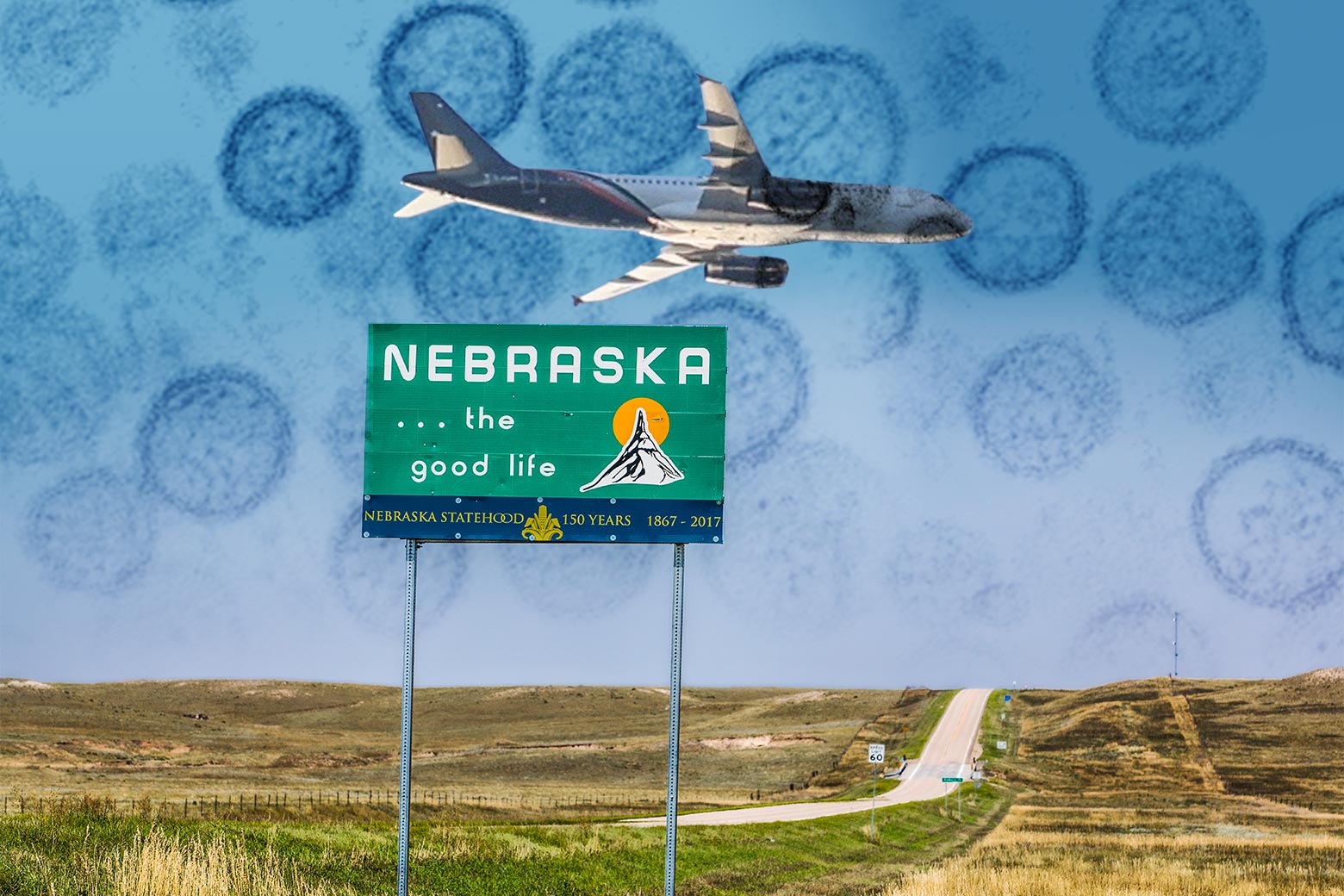
Imagine embarking on an international cruise vacation and ending up landlocked in the middle of America. That’s what happened to 16 Americans who were aboard the Dutch cruise ship MV Hondius in April, where a hantavirus outbreak has so far resulted in 11 reported cases and three deaths. The U.S. citizens from that cruise are now in isolation at the University of Nebraska Medical Center in Omaha—mostly as a precaution after potential exposure, although one patient has shown symptoms and is being tested to confirm whether they have the disease. Another patient in quarantine is making reels about the experience for followers of his Instagram travel account.
That introduction might feel vaguely familiar, because it kind of is. In 2020, Nebraska hosted 13 Americans who had been exposed to the then-novel COVID-19 on a Japanese ship. During the 2014 Ebola epidemic, the UNMC treated some of the first Ebola patients in America. Why a hospital in Nebraska, of all places? “We are prepared for situations exactly like this,” said Michael Ash, the CEO of Nebraska Medicine, in a statement about the hantavirus outbreak.
UNMC has been preparing for “high-consequence” infectious diseases—as they are ominously called—basically nonstop for two decades. The UNMC Biocontainment Unit opened in 2005 under the direction of physician Philip Smith, in response to post-9/11 fears of bioterrorist attacks and the 2003 outbreak of SARS. Smith trained a team of experts and insisted that the resources of the unit be kept available—unused, ready, and prepared for true emergencies—for almost 10 years. In 2014, his vision was vindicated; the unit successfully treated its first Ebola patients. The staff “knew that it was imminent” from the number of American healthcare workers who’d gone to help in West Africa, Angela Hewlett, the unit’s current medical director, told me. They were ready and leaped into action.
It was thanks to Smith’s dedication that they were able to respond so successfully, says Hewlett. He “really was a pioneer.” The unit originated many infection containment and personal protective equipment practices that are now standard across medicine today. The staffers were also early adopters of telemedicine; the deadly nature of the Ebola virus required intense sterilization of anything that came into contact with a patient. Using videoconferencing and Bluetooth stethoscopes let them treat patients remotely and reduced the running time of the sterilizing autoclave (think: enormous industrial dishwasher), although even with just a single patient in the unit, the autoclave still ran for up to 12 hours a day.
That patient, the first person to be treated by the unit, was American medical missionary Rick Sacra. He spent three weeks in isolation after catching Ebola while caring for patients in Liberia. “At first I was like, Why Nebraska? I mean, I’m from Massachusetts,” Sacra told KETV News at a 10-year anniversary event in 2024. But once he arrived, he said, he saw UNMC’s “amazing preparations.” (UNMC knows that the “Why Nebraska?” question is on everyone’s mind too; it offers a fact sheet with that title. Part of the answer might simply be that an empty unit waiting for the worst-of-the-worst kind of virus attracts “hardcore biocontainment geeks,” as a quote from Smith puts it.)
[

](https://slate.com/business/2026/05/summer-vacation-travel-prices-iran-war.html)
In 2019, following its success treating Ebola patients without any infections of healthcare staff, UNMC opened a brand-new institute called the Training, Simulation, and Quarantine Center, the result of a $20 million federal grant. The TSQC occupies an entire floor of its building, and includes the 20-bed National Quarantine Unit, where the hantavirus-exposed Americans from MV Hondius are now under observation. The Quarantine Unit is the only one of its kind in the country, but it doesn’t have the same intense protocols as the Biocontainment Unit. It’s “more like a hotel than a patient care space,” said Hewlett in a press statement on May 11. The rooms have exercise equipment and a TV to keep people comfortable while they’re waiting under observation. You still wouldn’t find anything like them on Airbnb; the floors are entirely seamless—no cracks for a virus to hide in—and the air is continually swapped out using negative pressure systems.
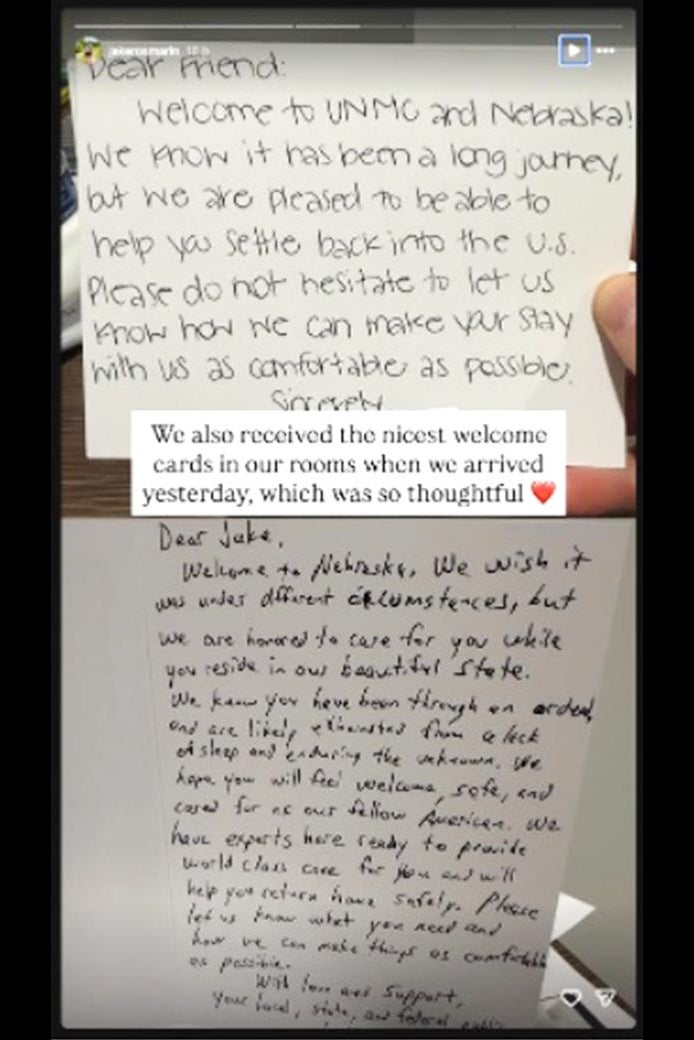
The TSQC stood unused for only a few months before it welcomed passengers from a cruise ship with a COVID outbreak. “The majority of our guests have never been to Nebraska,” a nurse in the unit told Slate at the time, noting that the opportunity to use their containment skills brought on “a mixture of excitement and sadness.” Jake Rosmarin, the influencer who is currently in quarantine there, shared notes he had received from the TSQC team. “Welcome to Nebraska,” one said. “We wish it were under different circumstances, but we are honored to care for you while you reside in our beautiful state.”
These days, when there is no big outbreak, the rooms of the Biocontainment Unit are used as normal hospital space or for training. Volunteer teams across UNMC stay ready, completing quarterly drills in infection prevention and quarantine processes. They practice vital skills like cleaning spills and taking out the trash, seemingly simple tasks that are actually key steps in an intricate anti-contamination dance. You can take a virtual tour of the five rooms of the Biocontainment Unit and its step-by-step process of managing extra-infectious patients.
Unusual disease outbreaks underscore the need for institutions like this. The Quarantine and Biocontainment units not only protect patients but provide a place for doctors to learn more about new and dangerous pathogens. In the case of the Andes hantavirus strain, there’s still a lot to learn to understand how the virus spreads. “Traditionally, this virus has been thought to be one that would need very, very close contact most of the time to transmit. I still think that’s probably the case,” said Hewlett. But “all of that is really something that we’re just sort of finding out about.”
How long will the wayward cruise ship passengers stay in Omaha? The Americans currently under observation in the Quarantine Unit may be held for up to six weeks, per World Health Organization guidelines. Hewlett said that the unit would be working with its U.S. public health partners, including the Centers for Disease Control and Prevention, to determine if and when each patient could be released. They will speak to each patient about their exposure to the virus to determine their risk, and “then there’ll be some conversations about the most appropriate duration of quarantine for these individuals,” she said.
 Sign up for Slate's evening newsletter.